
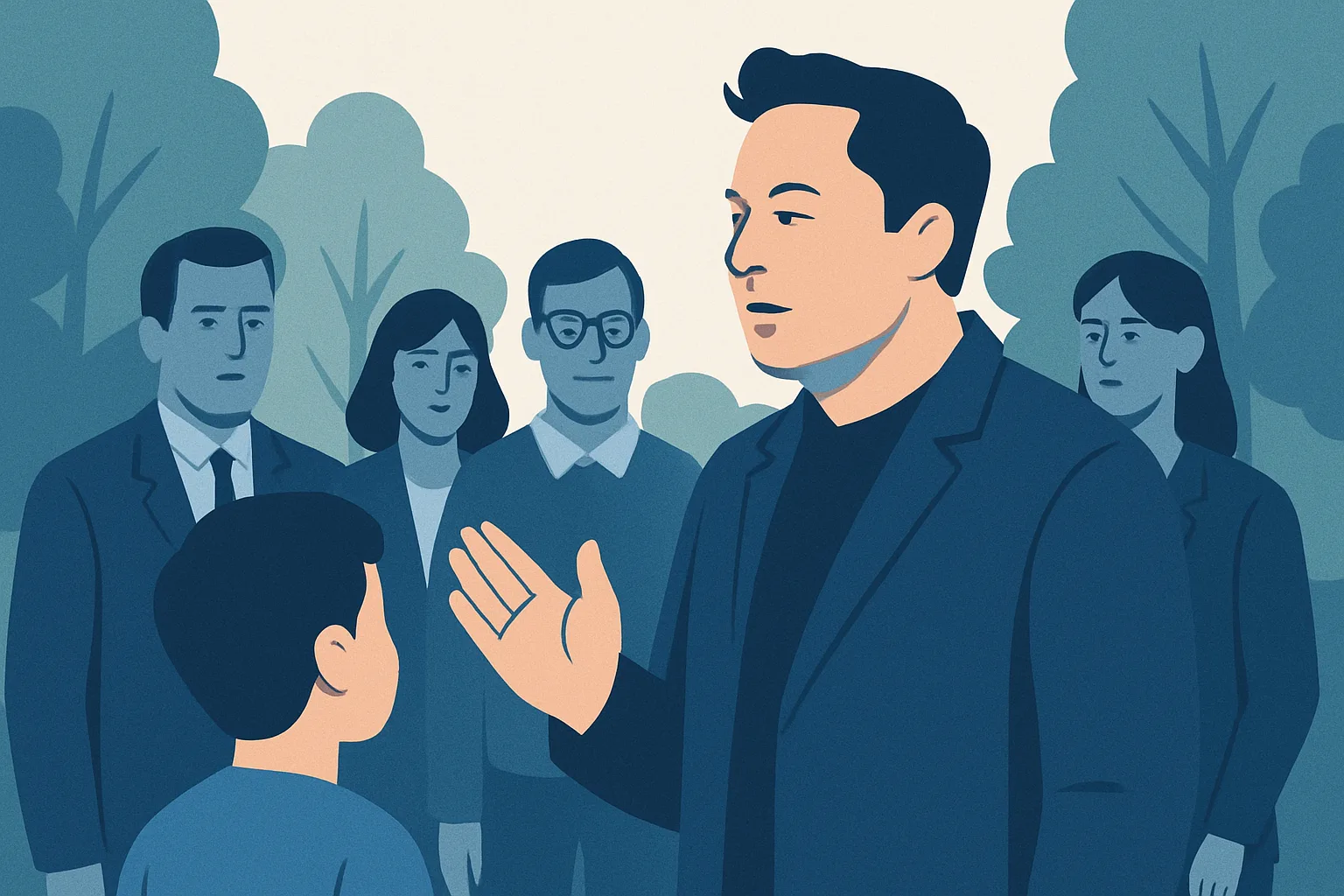
Elon Musk has announced plans to give one share of SpaceX to every child in America next year, a move that marks his first major philanthropic initiative amid growing concerns about the impact of artificial intelligence on jobs and society.
In a post on X, the social media platform formerly known as Twitter, Musk wrote: “Next year, I will give one of my SpaceX shares to every kid in America. This will be the first of many.”
The announcement comes as SpaceX, valued at around $2 trillion, continues to dominate the space industry. The company began trading publicly in June 2026, with shares closing at about $146. Based on that price and the estimated 73 million children under 18 in the U.S., according to the U.S. Census Bureau, the giveaway could amount to roughly $10.5 billion.
Musk did not provide details on how the shares would be distributed or what criteria would be used to determine eligibility. His post was made in response to a similar pledge from Anthropic, which announced it would commit 5% of its shares to a Public Benefit Fund focused on social causes related to AI.
Musk replied, “I recommend giving the shares directly to the public… This is what I will be doing.”
The move represents a significant step for Musk, who signed the Giving Pledge in 2012, committing to donate the majority of his wealth to charitable causes. His charitable organization, the Musk Foundation, has focused on areas such as renewable energy, space exploration and pediatric research, with more than $14 billion in assets as of 2024.
Musk has also been active in political donations, contributing more than $276 million to Republican groups since July 2026, according to The New York Times.
His announcement comes amid growing scrutiny of tech firms’ role in society. In recent months, concerns about the impact of AI on jobs have intensified, with the International Monetary Fund warning that nearly 40% of jobs globally could be affected by AI advancements.
Musk, who owns X, responded to Anthropic’s pledge by suggesting that giving shares directly to the public would be a more effective way to ensure widespread benefit.
While the gesture has been praised by some as a bold philanthropic move, others have raised questions about its feasibility and the potential for legal and logistical challenges. Musk’s philanthropic record has faced criticism before, including his promise to donate $6 billion to the UN World Food Program, which has not been fully realized.